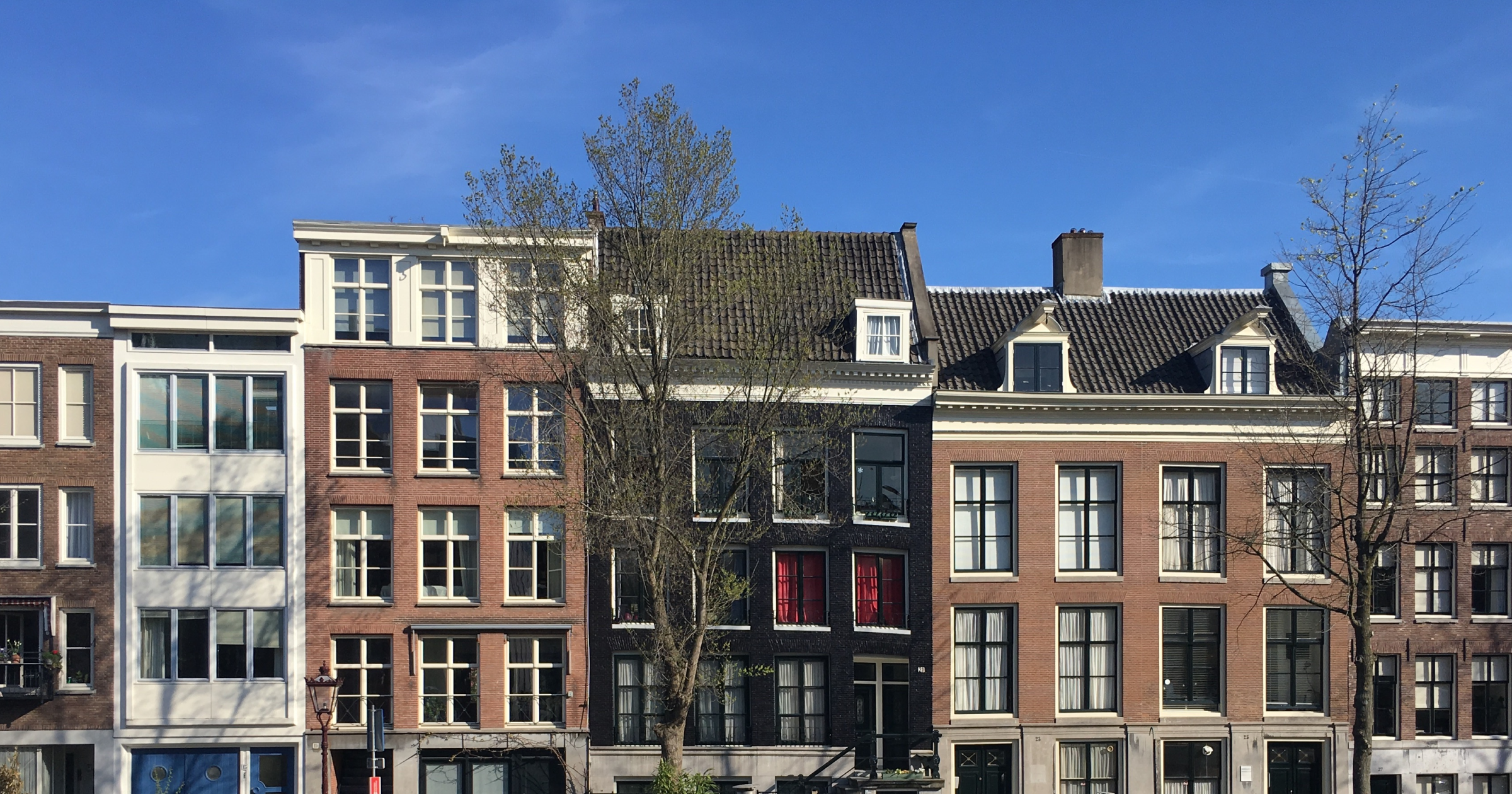
Over the past few years, some of the world's most respected journals — PNAS, The Lancet, the Journal of Urban Economics — have published a run of studies on what happens when people live closer together. The pattern is consistent: homes that share walls, land and infrastructure are lower-impact, the neighbourhoods they create are better for our health, and the cities they build are more prosperous. Here's the evidence, minus the jargon.
Start with energy. In 2020, researchers at the University of Michigan analysed the energy use of roughly 93 million American homes — the most comprehensive study of residential emissions ever done — and published the results in PNAS. Emissions climb with floor area and affluence: wealthier households run footprints about 25% higher than lower-income ones, and some affluent suburbs emit up to 15 times more per person than neighbourhoods just down the road. Denser settlement patterns, which favour smaller and better-connected homes, consistently pull emissions down. It makes intuitive sense. An apartment or townhouse has less surface area leaking heat, a smaller footprint per person, and shared systems a standalone house has to run alone.
Then there's the sharing itself. A 2020 study in Energies looked at household economies of scale across the EU and found that one-person households carry the highest carbon and energy footprints per person — about 9.2 tonnes of CO₂-equivalent a year — because nobody shares the fridge, the heating or the roof. Every extra person under one roof spreads that fixed cost. Housing that suits couples, families and multi-generational living captures those sharing gains across a whole city.
The health story is just as strong. The Lancet Global Health ran a landmark series in 2022 benchmarking 25 cities across 19 countries — Melbourne among them — and reached a blunt conclusion: city design is a health intervention. Compact neighbourhoods with connected streets, local shops and decent public transport get people moving, and the series identified the specific density thresholds cities need to hit before walking, cycling and public transport genuinely take off. Sprawl, by contrast, locks in the sedentary, car-bound version of daily life.
And the community? This is where the "lonely apartment dweller" stereotype falls over. A 2023 study in Health & Place tested whether walkable neighbourhoods actually cause better social health, or whether sociable people simply move there. Even after controlling for that, walkability remained positively linked to social interaction between neighbours. When homes, shops and parks sit close together, people bump into each other on foot — and those small, repeated encounters are the raw material of community.
It turns out those encounters matter more than most of us realise. A famous meta-analysis in PLOS Medicine pooled 148 studies covering more than 300,000 people and found that strong social relationships improve your odds of survival by about 50% — an effect on mortality comparable to quitting smoking, and bigger than the effects of obesity or physical inactivity. Loneliness isn't just unpleasant; it's a genuine health risk. Which makes the design of where we live — and whether it helps us know our neighbours — a health question, not a lifestyle preference.
Shared living spaces, run well, are unusually good at this. A 2020 scoping review in Public Health Reviews looked at the evidence on cohousing — homes with private dwellings plus genuinely shared spaces — and found residents reporting less loneliness, higher trust in their neighbours, a stronger sense of belonging, and more social support given and received than comparable non-cohousing peers. The shared courtyard, the common room, the vege garden: these aren't nice-to-haves. They're the infrastructure of the incidental catch-up.
There's an economic dividend too. The most comprehensive synthesis on record — 347 estimates from 180 studies, published in the Journal of Urban Economics in 2019 — found that density lifts wages and productivity, improves access to jobs and services, makes infrastructure cheaper per person, and lowers energy use per capita. Cities that make compact housing hard to build are, quite literally, leaving prosperity on the table.
None of this happens automatically. Stacking people into buildings doesn't create community — running those buildings well does. Australia's largest study of strata living, led by Professor Hazel Easthope at UNSW's City Futures Research Centre, describes bodies corporate as a kind of fourth tier of government: they levy funds, set rules and make the decisions that determine whether a building is well-maintained, harmonious and financially sound. And when that governance falters, residents feel it — recent peer-reviewed work in Facilities found that badly handled building-defect processes measurably erode resident wellbeing.
The good news is that the reverse is also true, and democracy is the mechanism. Research on multi-owned housing surveying more than 2,000 homeowners found that when residents believe their say actually counts — individually and collectively — they participate more in how their building is run, and that participation feeds stronger attachment to place and stronger neighbourly ties. It's a virtuous circle: inclusive decisions build trust, trust builds participation, and participation delivers better-maintained buildings, sounder finances and a real sense of community. A well-run, genuinely democratic body corporate is one of the few livability levers entirely in a community's own hands.
So the next time someone tells you apartments and townhouses are the compromise option, you can point them at the evidence. Shared urban living, done well, is the higher-performing choice on the three counts that matter: a lighter footprint, a healthier daily life, and neighbourhoods where knowing the people around you is the default — not the exception.
The research
- Goldstein, B., Gounaridis, D. & Newell, J.P. (2020). The carbon footprint of household energy use in the United States. Proceedings of the National Academy of Sciences, 117(32), 19122–19130. https://www.pnas.org/doi/10.1073/pnas.1922205117
- Ivanova, D. & Büchs, M. (2020). Household sharing for carbon and energy reductions: The case of EU countries. Energies, 13(8), 1909. https://doi.org/10.3390/en13081909
- Giles-Corti, B. et al. (2022). Creating healthy and sustainable cities: what gets measured, gets done. The Lancet Global Health, Series on Urban Design, Transport, and Health. https://www.thelancet.com/journals/langlo/article/PIIS2214-109X(22)00070-5/fulltext
- Carson, J.R., Conway, T.L., Perez, L.G., Frank, L.D., Saelens, B.E., Cain, K.L. & Sallis, J.F. (2023). Neighborhood walkability, neighborhood social health, and self-selection among U.S. adults. Health & Place, 82, 103036. https://www.sciencedirect.com/science/article/pii/S1353829223000734
- Holt-Lunstad, J., Smith, T.B. & Layton, J.B. (2010). Social relationships and mortality risk: A meta-analytic review. PLOS Medicine, 7(7), e1000316. https://doi.org/10.1371/journal.pmed.1000316
- Carrere, J. et al. (2020). The effects of cohousing model on people's health and wellbeing: a scoping review. Public Health Reviews, 41, 22. https://doi.org/10.1186/s40985-020-00138-1
- Ahlfeldt, G.M. & Pietrostefani, E. (2019). The economic effects of density: A synthesis. Journal of Urban Economics, 111, 93–107. https://doi.org/10.1016/j.jue.2019.04.006
- Easthope, H. et al. Governing the Compact City: The role and effectiveness of strata management. UNSW City Futures Research Centre. https://cityfutures.ada.unsw.edu.au/research/projects/governing-the-compact-city-the-role-and-effectiveness-of-strata-management-in-higher-density-residential-developments/
- Navigating building defect management in Australian apartments: processes and impacts on resident well-being (2026). Facilities, 44(15–16). https://www.emerald.com/f/article/44/15-16/1/1346295/Navigating-building-defect-management-in
- Yau, Y. (2018). Tripartite efficacy beliefs and homeowner participation in multi-owned housing governance. Sustainability, 10(9), 3338. https://doi.org/10.3390/su10093338